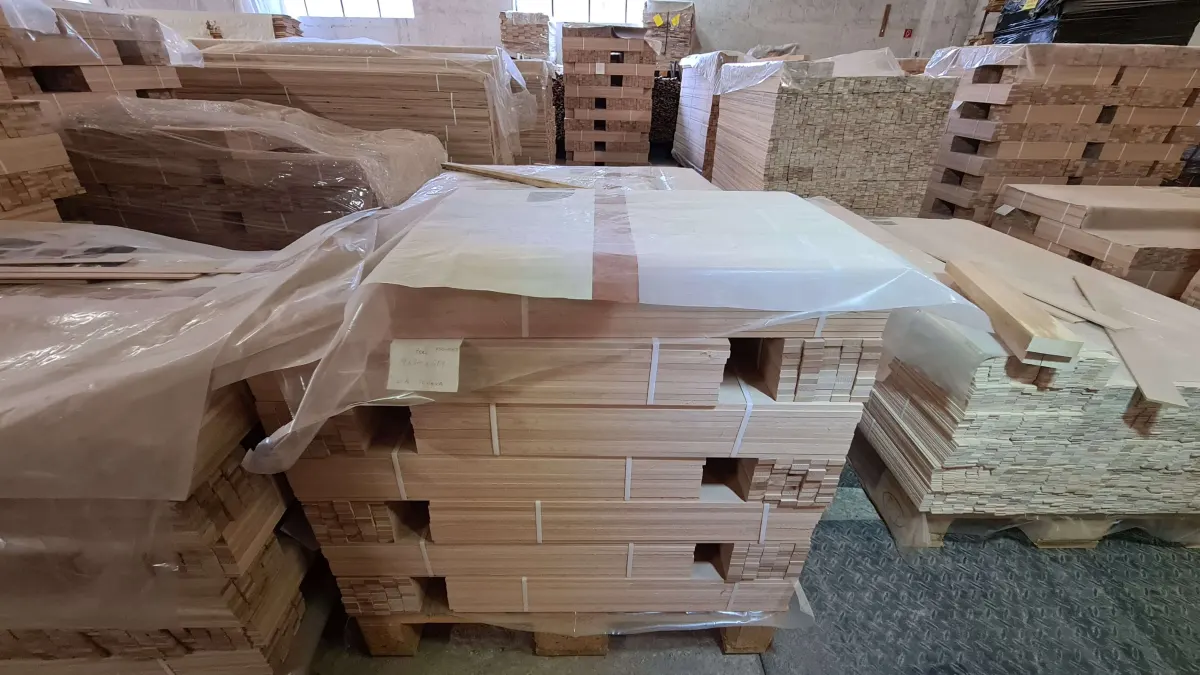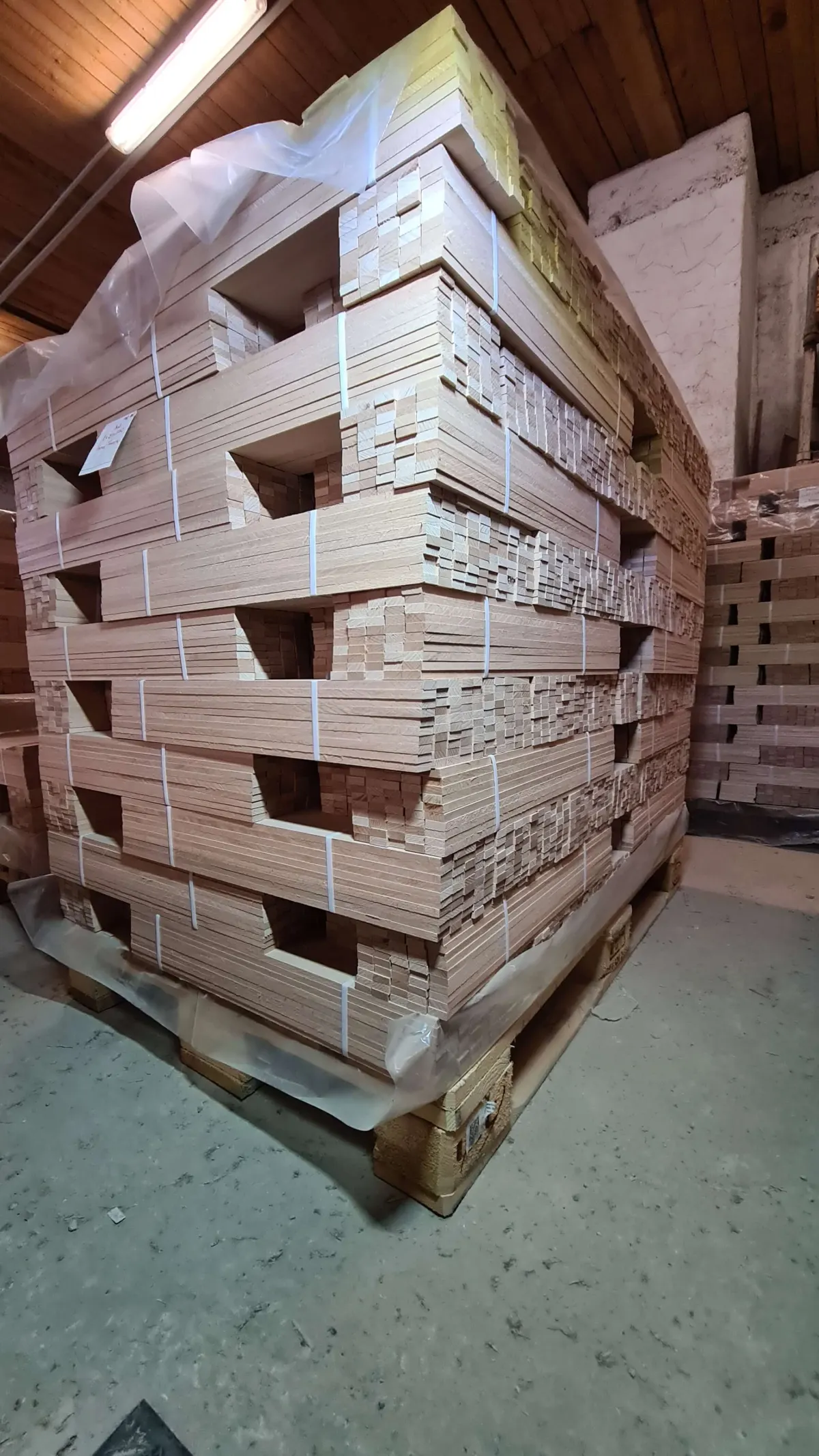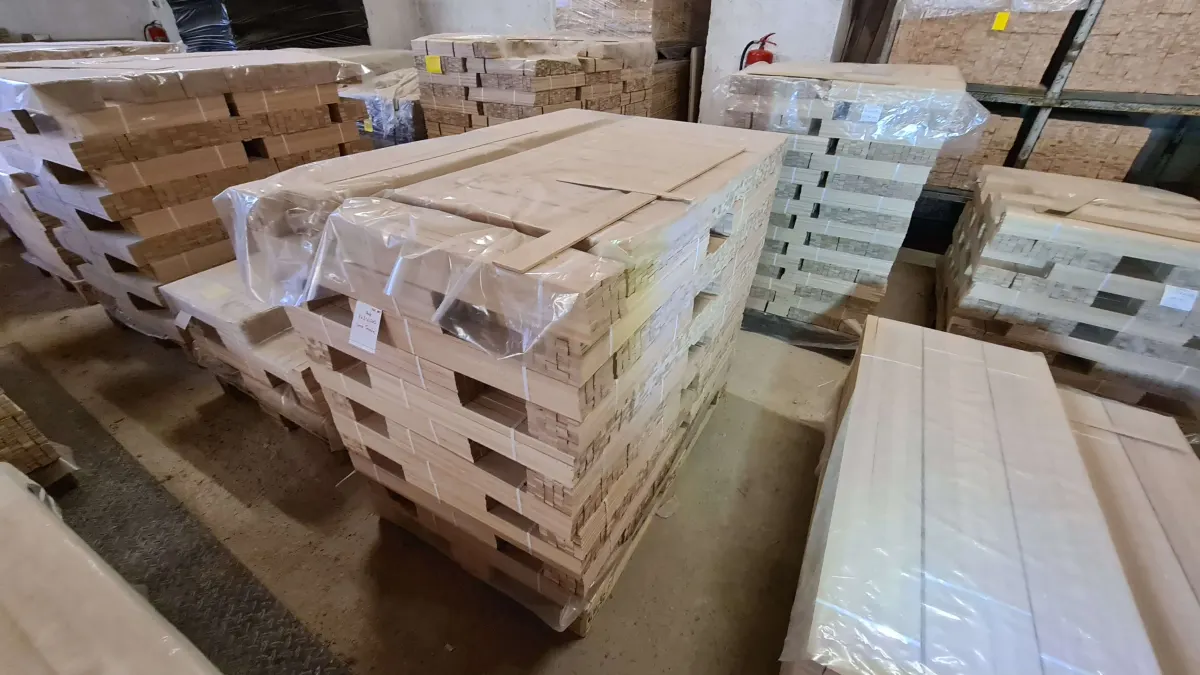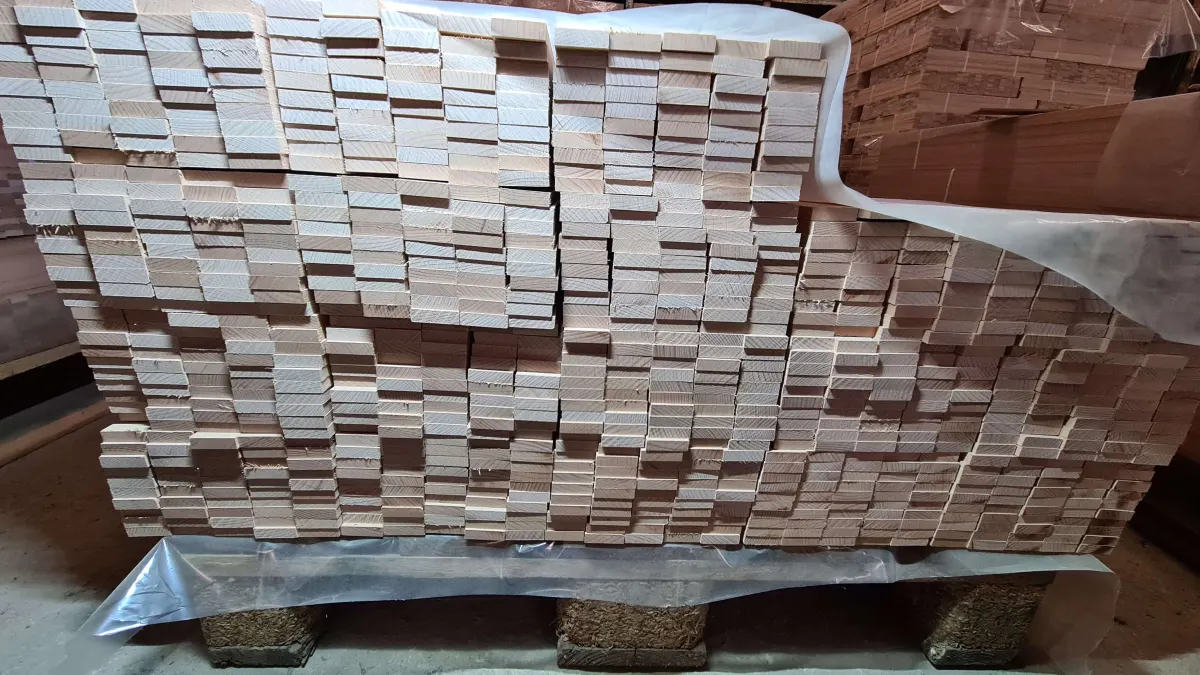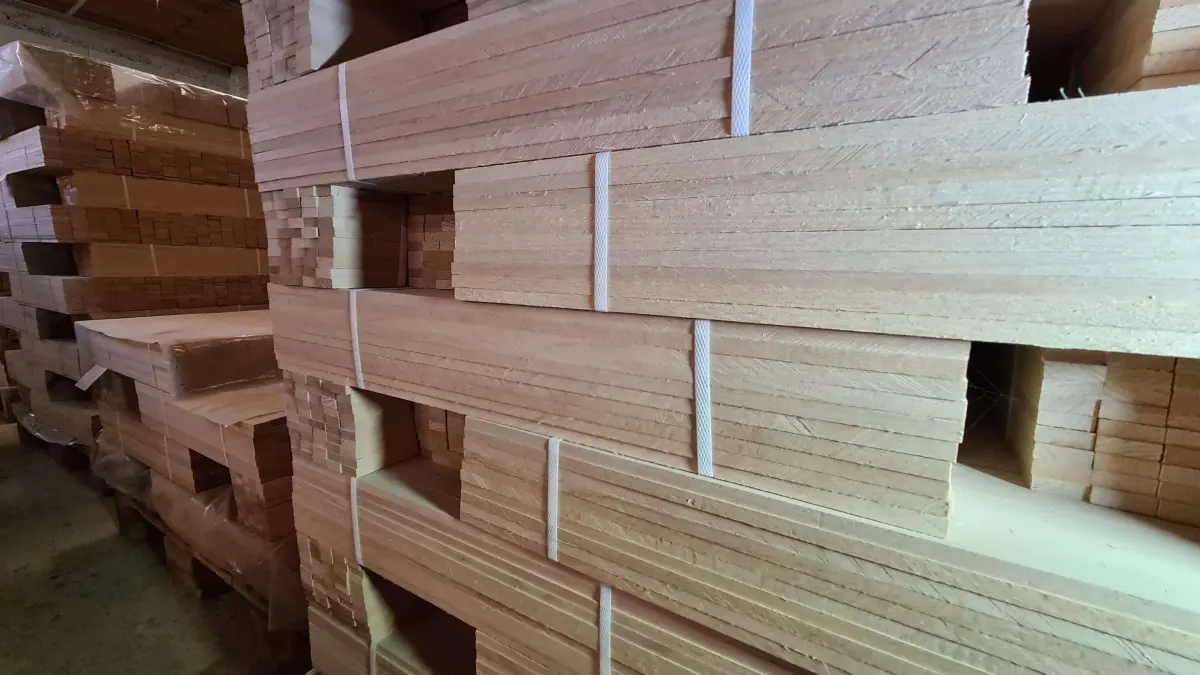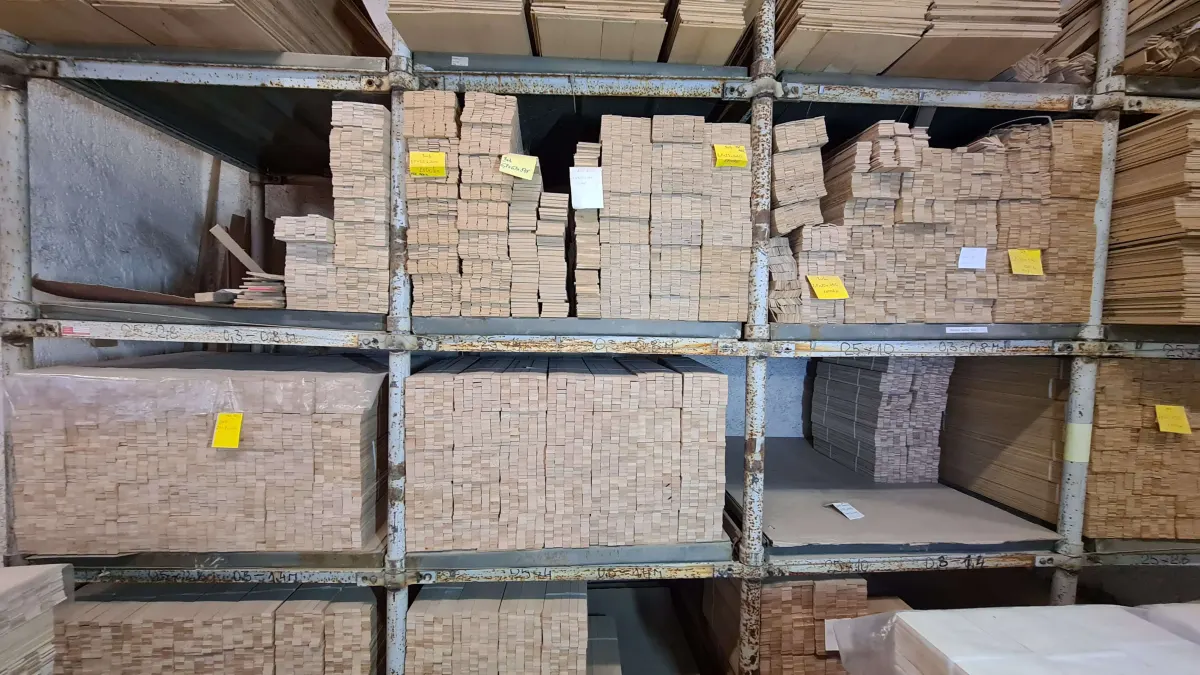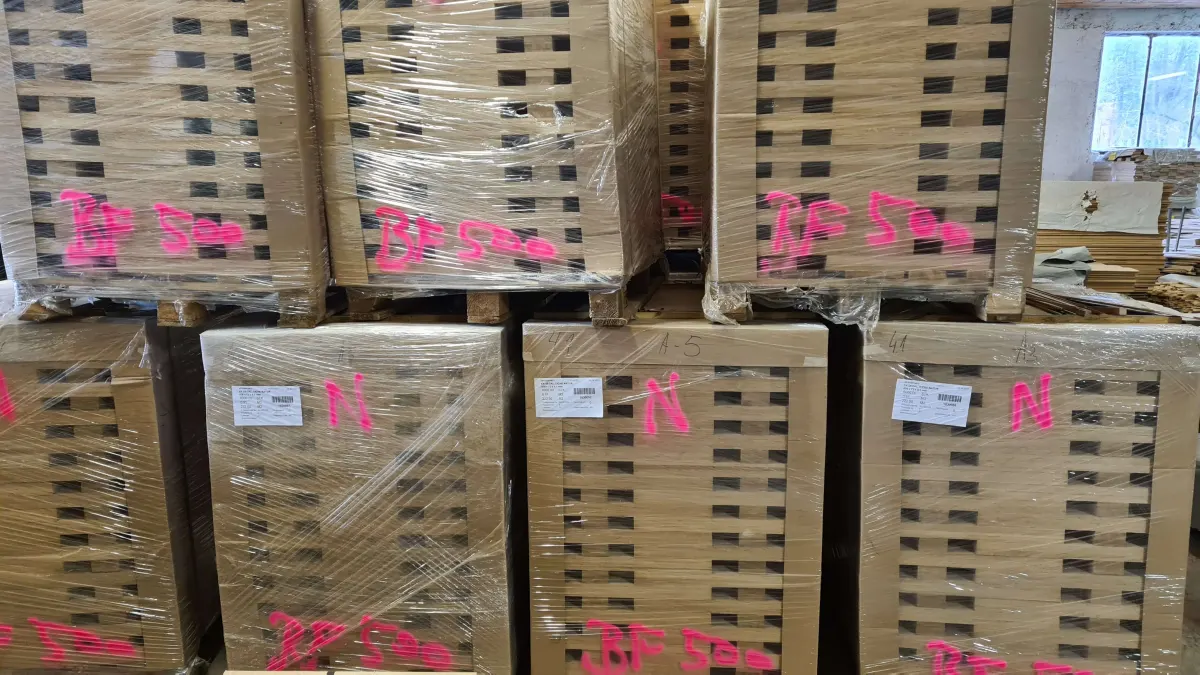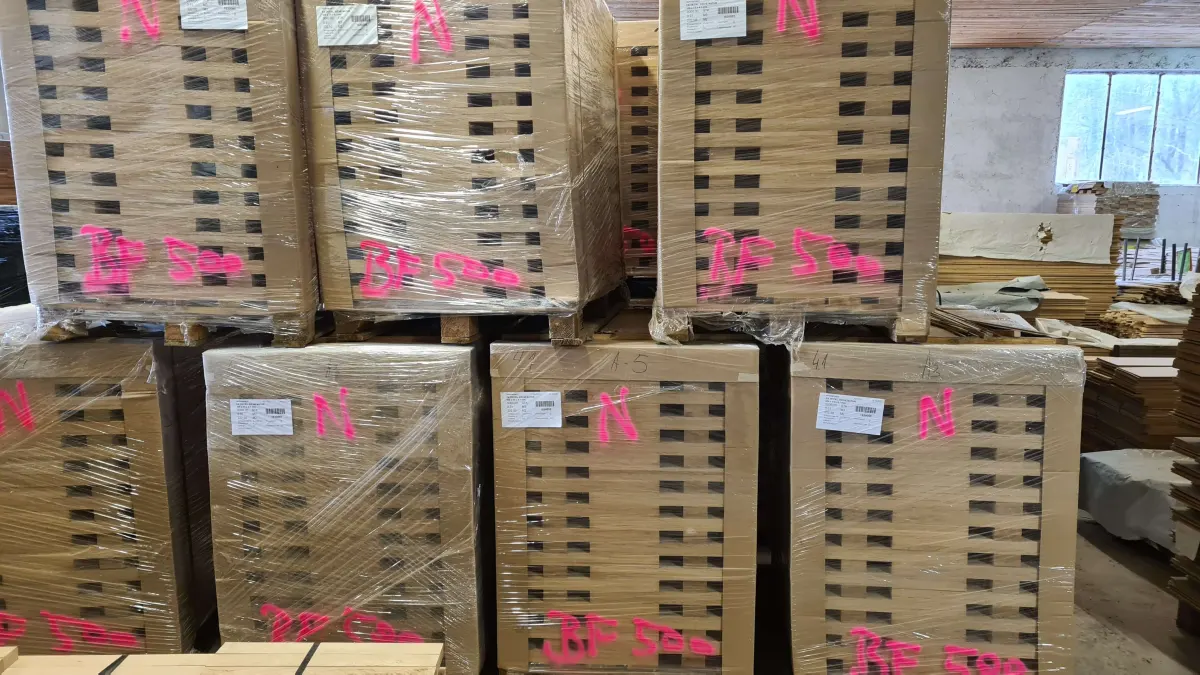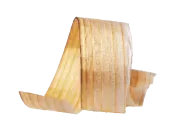
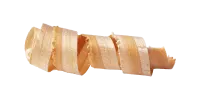
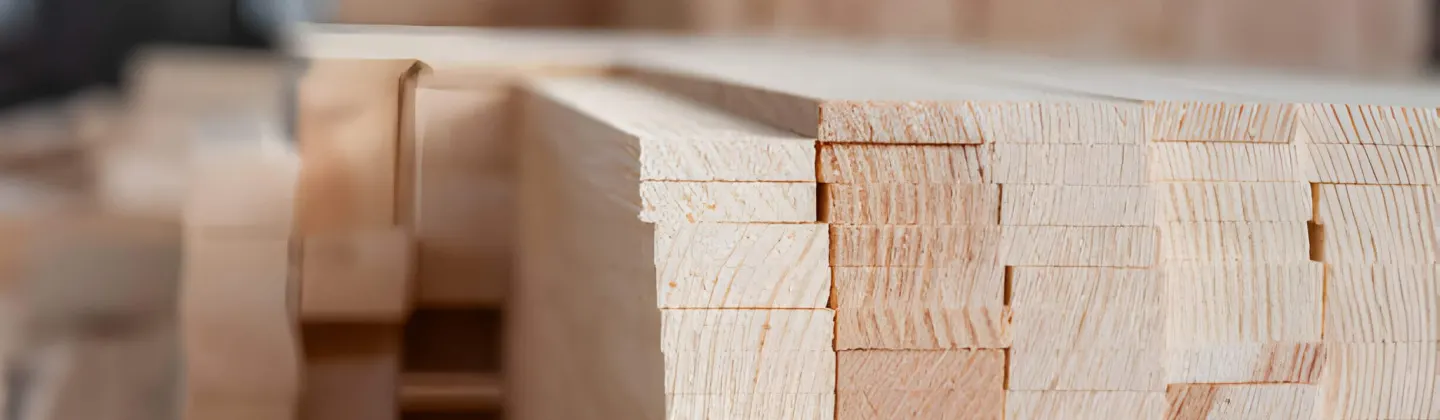
Furniture edges
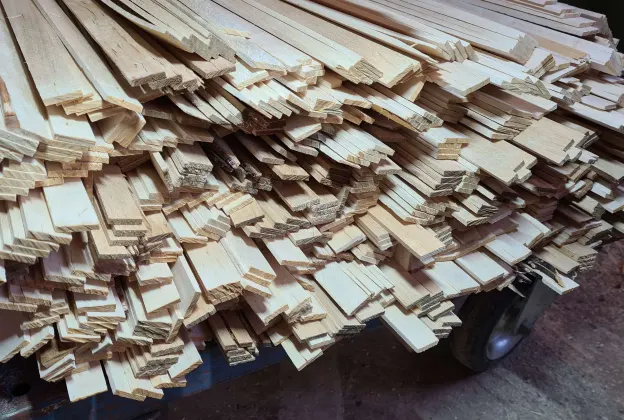
Production process
Log processing
The first step is processing the logs, which are brought from the log yard and run through the band sawmill. There the logs are cut into boards, which are then transported to the drying kiln to remove moisture.
Board drying
The boards cut from the logs are placed in the drying kiln, where moisture is removed in a controlled process. This step is important for the stability of the material and minimises the risk of deformation.
Ripping the boards
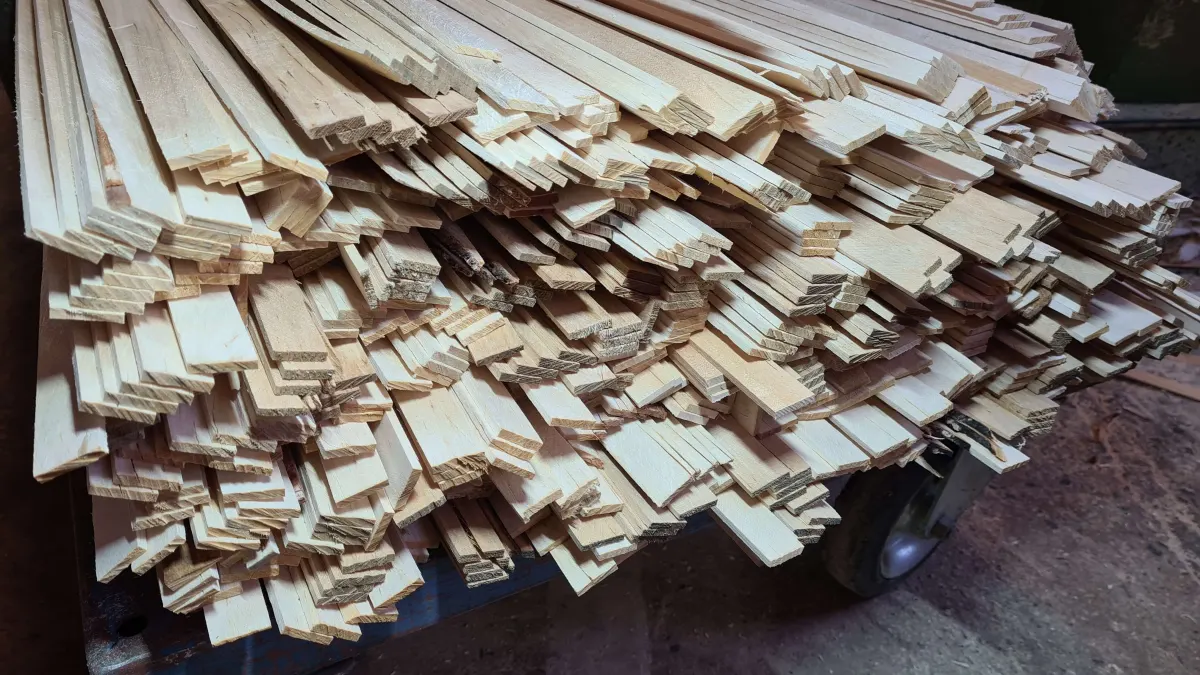
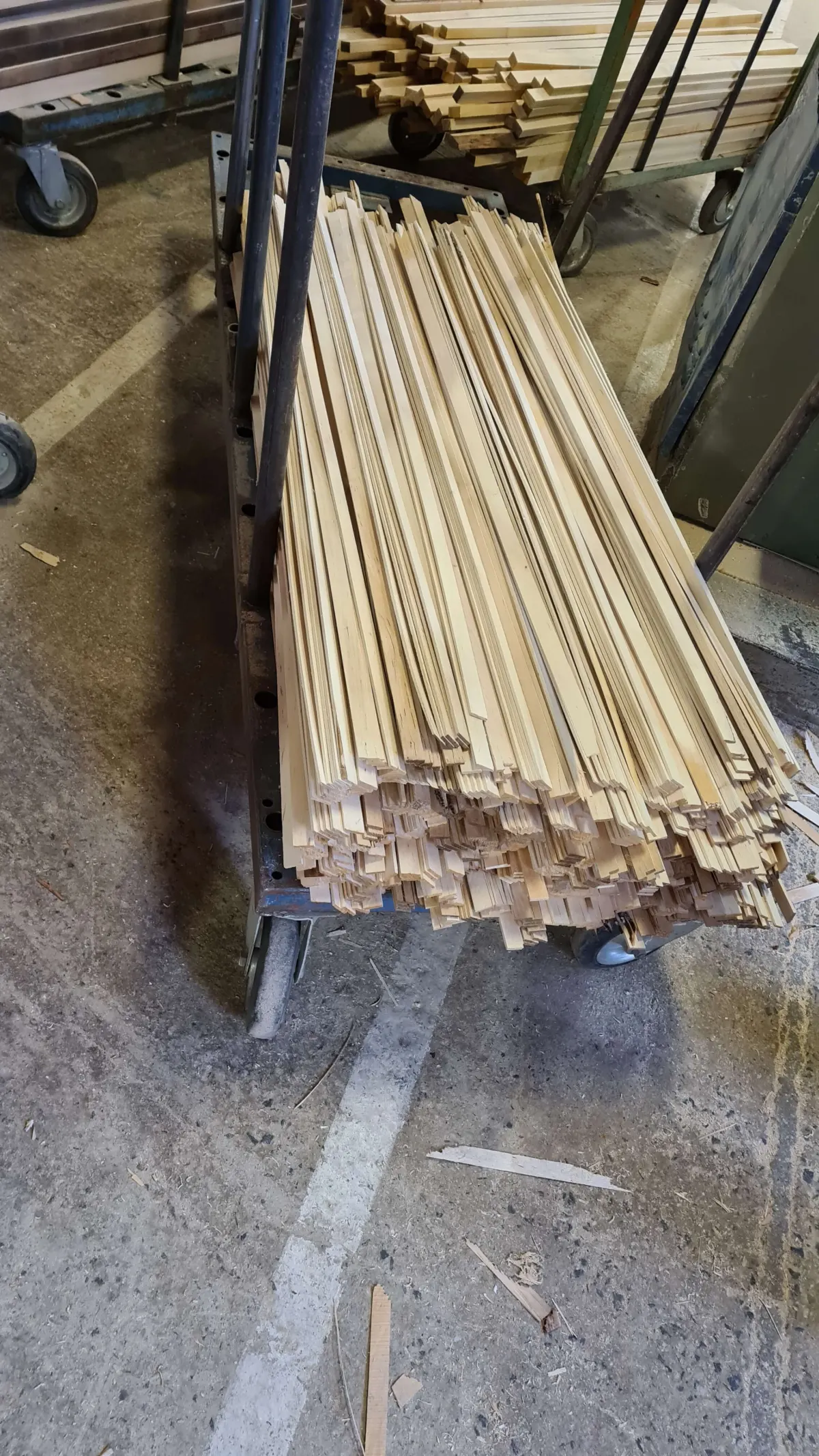
After drying, the boards are ripped on the rip saw. This step divides the material into smaller pieces ready for further processing.
Ripping on the smaller rip saw
The material is then processed on a second, smaller rip saw, which provides an even finer division. This step prepares the raw material for the production of specific furniture edges.
Edge sanding
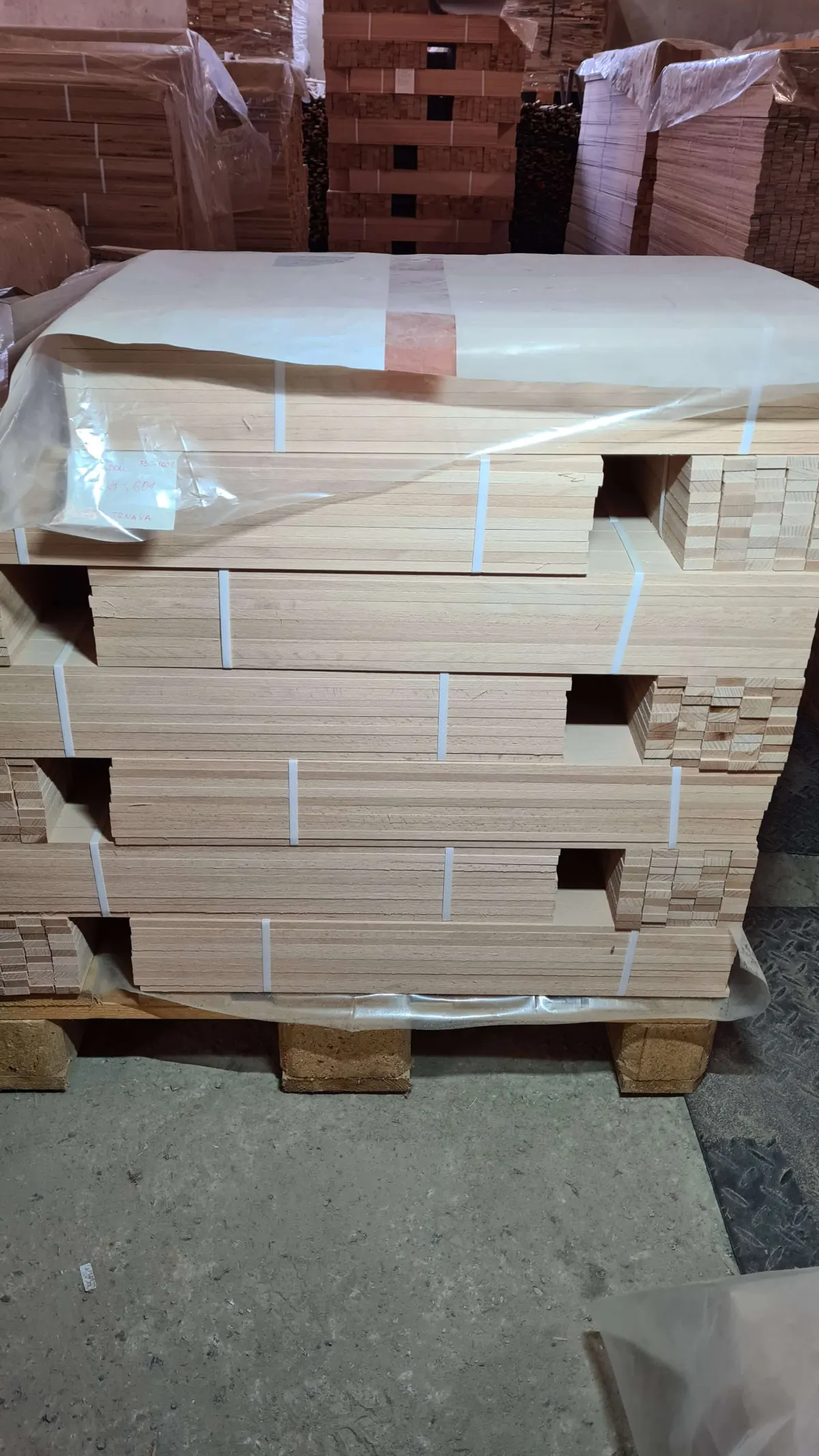
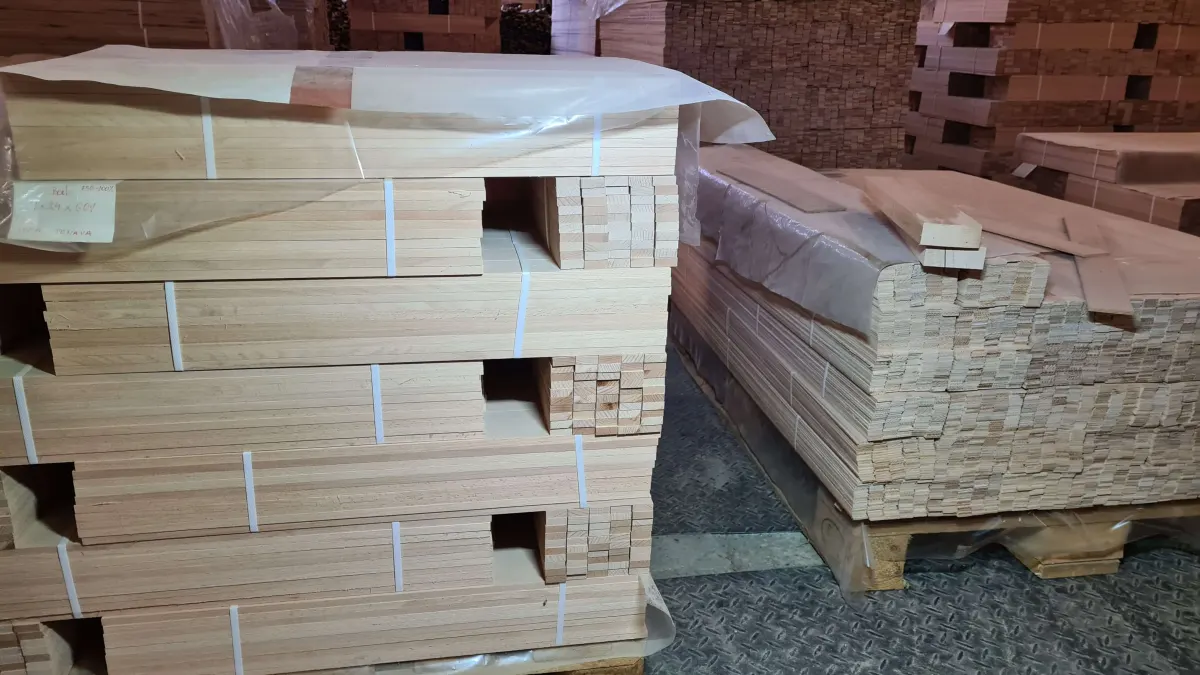
The cut edges are then sanded on a Houfek double-sided belt sander. This gives the edges a smooth, consistent surface and their final appearance.
Steaming beech in steam pits
When edges are made of beech, steam pits are used. They unify the colour of the beech wood to achieve the required appearance and properties.